
The Rise of Hardware-Free Cabinetry
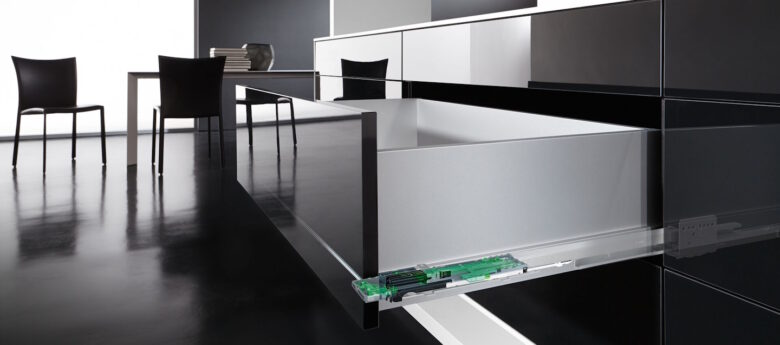
Cabinetry design has always balanced form and function, but that balance is leaning decisively toward minimalist solutions. Influenced heavily by European trends, designers in North America are embracing sleek, handle-free drawers and doors that create uninterrupted visual planes in kitchens, bathrooms, and office environments. The aesthetic appeal is clear: fewer protrusions, cleaner lines, and a greater sense of openness in spaces where every square foot matters.
Beyond aesthetics, however, hardware-free cabinetry is also a response to lifestyle shifts. With apartments and condos trending smaller, homeowners and designers alike are seeking storage systems that maximize capacity without overwhelming the space. Large, wide drawers that replace banks of smaller ones not only save material thickness but also provide easier access to pots, pans, and household essentials. What once was a limitation of hardware technology, keeping drawers narrow to avoid racking or sticking, is now a surmountable challenge thanks to innovations in slide mechanisms and synchronized movement systems.
Large Drawers, Smaller Footprints
The preference for larger drawers is not new; what has changed is the ability to deliver them reliably. Advances in drawer slides and support hardware mean cabinetmakers can now meet longstanding requests for expansive drawers without sacrificing opening or closing smoothness or structural integrity. For end users, the shift translates into fewer pulls to open and a reduction in wasted space lost to dividers and panel thickness.
Ergonomics is another driving factor. Larger drawers reduce the need to bend or reach deep into cabinetry, a common frustration with narrow drawers or fixed shelves. Modern wide drawers can even be compartmentalized, offering flexible storage solutions within a single unit. This minimizes the familiar kitchen scenario of opening a dozen small drawers to find the right tool, streamlining the storage process.
The Appeal of Metal Drawers
While traditional dovetail wood drawers remain valued for craftsmanship, metal drawers are gaining prominence across markets beyond the major metropolitan hubs. Designers appreciate their compatibility with the increasingly popular use of high-quality laminates, melamine, and textured panels. Metal sides provide consistent reveals, resist warping across climate zones, and deliver a durable, easy-to-clean surface that suits both residential and institutional settings.
From a manufacturing perspective, steel drawers also address sustainability and supply chain concerns. Metal drawers also offer cost and fabrication time savings versus dovetail drawers with traditional undermount slides. Unlike wood, which can fluctuate in availability and quality due to geopolitical disruptions, such as reduced birch supply from Russia, metal drawers offer reliability and long-term performance. Many are produced using recycled steel, aligning with growing eco-conscious expectations in cabinetry and construction.
Functionality Without Handles
The functional heart of handle-free cabinetry lies in push-to-open technology. Whether mechanical or electronic, these systems allow drawers to be activated with a simple press of the hand, hip, or knee. This hands-free feature becomes especially valuable in kitchens, where users often juggle hot pots or messy ingredients. Paired with soft-close mechanisms, push-to-open drawers offer a smooth, controlled experience that elevates daily interaction with cabinetry.
User experience, in fact, often becomes the most persuasive factor. Even homeowners who are unaware of the specific brand of hardware can feel the quality difference in how a drawer glides and closes. That sensory impression, smooth motion, reliable opening, quiet closure, contributes to the overall sense of craftsmanship in a completed project.
Although the advantages of push-to-open systems are obvious, engineering them to handle wide, heavy drawers has historically been a challenge. Older designs often required different hardware for each drawer size or weight, leading to complicated assemblies and extra work for cabinetmakers. Some systems now achieve this by using a single, adjustable unit that can be fine-tuned for different applications. Rather than requiring a complete change in slides or multiple part numbers, these plug-and-play designs clip directly into existing hardware platforms. The simplicity reduces installation headaches for manufacturers while delivering a consistent experience for homeowners.
Innovation Driving the Future
Sustainability continues to shape cabinetry decisions, influencing both material selection and manufacturing practices. Designers are drawn to durable solutions that extend product life cycles, reducing the need for replacements and minimizing waste. Hardware manufacturers are responding with products engineered for longevity, incorporating recycled inputs, and lowering carbon footprints through efficient processes.
Metal drawers, in particular, are positioned as a sustainable choice: they are durable, recyclable, and unaffected by issues like warping or porosity. For designers and builders navigating increasingly eco-conscious client demands, such solutions provide both functional performance and an environmental advantage.
The evolution of handle-free cabinetry has been accelerated by hardware makers who treat innovation as an ongoing process rather than a one-off response to trends. Movement systems that anticipate the demands of wider drawers, heavier loads, and hands-free convenience have set new benchmarks for performance.
One of the clearest examples of innovation in cabinetry hardware is the continued refinement of push-to-open soft-close technology. While synchronized undermount slide systems have already improved the performance of wide drawers by minimizing racking and promoting smooth, stable movement, newer integrated mechanisms take functionality a step further by combining touch-to-open convenience with controlled soft-close action in a single solution. Designed for compatibility across a range of concealed slide and drawer system configurations, these mechanisms can often be incorporated during installation or added later as a retrofit. Features such as tool-free assembly, adjustable opening force, and synchronized activation make them a flexible, installer-friendly option for cabinetmakers working across varied drawer sizes and weight classes.
Equally important is the operational efficiency these systems bring to both fabrication and design. A single mechanism can often accommodate multiple drawer widths and load capacities, helping reduce inventory complexity while simplifying specification and installation. Adjustable opening force also improves ease of use, allowing even larger or heavier drawer fronts to open with minimal effort. At the same time, low-profile designs can make retrofit applications possible without requiring extensive modification to the drawer box or cabinet. The result is hardware that supports the clean, handle-free aesthetic increasingly favored in contemporary interiors while ensuring the reliable, intuitive performance users expect in everyday use.
The rise of hardware-free cabinetry is more than a style trend; it reflects deeper shifts in how people live, cook, and interact with their spaces. From ergonomic advantages to sustainability gains, minimalist drawer systems are setting a new standard for modern design. For designers and manufacturers, the key takeaway is that not all push-to-open systems are created equal. Simplicity, reliability, and adaptability should guide hardware selection. When these qualities come together, handle-free cabinetry becomes not just a design statement but a practical, long-lasting solution that enhances both spaces and lives.
Jeff Brown is Eastern Regional Sales Manager at Grass America.