
High-Security Fences Bolster Access Control Efforts
Discussions about access control often focus on locking hardware and security systems within the built environment. However, effective access control strategies begin long before the building’s entrance.
Perimeter security not only has the ability to deter would-be trespassers, but it also plays a key role in delaying and controlling unauthorized access, both of which can enhance the effectiveness of access control systems within the built environment. Central to perimeter security, a well-specified, high-security fence system can be crucial to a comprehensive security plan. That said, specifying the right fence for a property depends on project goals and other security measures in place – such as landscaping that adheres to Crime Prevention Through Environmental Design (CPTED) principles.
Even though security goals can vary significantly between projects, understanding the basics of high-security fencing can streamline the process, helping to make specification more efficient and the end result more effective.
A Strong Perimeter Telegraphs a Secure Interior
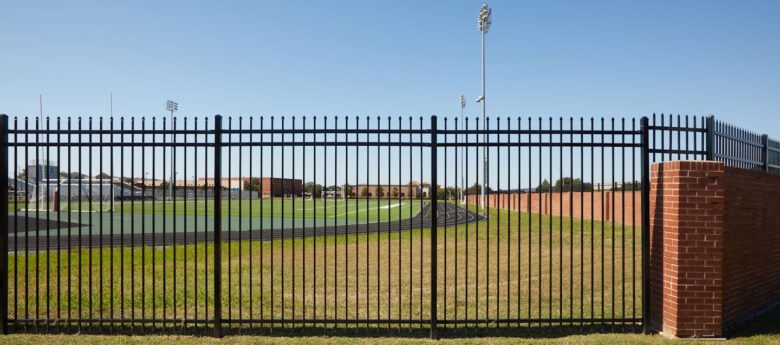
One of the ways a secure perimeter supports access control efforts within a building is by placing security measures in plain sight. For instance, a tall, steel fence with no visible fasteners not only establishes a clear boundary but it also firmly announces the levels of security intruders will encounter as they get closer to a building. In this example, the fence acts as a visual deterrent for unauthorized access, potentially stopping threats before they venture onto a property.
While a visual deterrent contributes to access control, it is necessary for security measures to contribute to meaningful security enhancement. For high-security fences, this can include strong materials and smart engineering. Industry-leading fencing systems often incorporate 45,000 – 50,000-pound steel formed into anti-vehicle panels and posts. When these fences are galvanized and finished with an architectural grade powder coat, they can resist corrosion to ensure a fence remains strong throughout its service life.
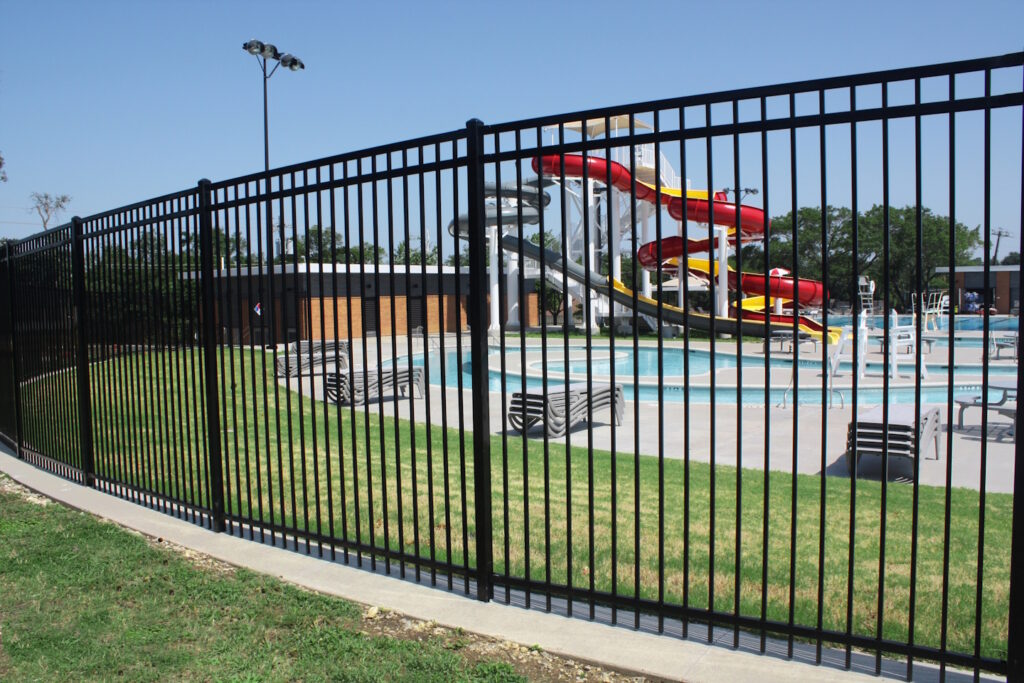
In addition to material quality, the engineering of a fence is crucial. A fence that includes anti-climb features and a hidden fastener system can more readily delay and deter scaling and destructive vandalism. Likewise, rackable design, which allows fence panels to follow changes in grade without gaps between the bottom of the fence and the ground, can help a high-security fence work with other CPTED principles for a more effective approach to achieving overall security goals.
Selecting a Fence That Works With Natural Landscaping
Rackable design is not the only way a fence can support other security measures, whether those are berms and ditches, dense shrubbery, or other CPTED-supported natural barriers. Just as the finish of a fence supports a system’s viable service life, it can also be essential when a fence is paired with strategically placed trees and shrubbery. Industry-leading finishes protect fence materials from watering and fertilization as well as potential damage caused by the upkeep of landscaping.
Further, a high-security fence that does not obstruct views can help occupants identify incoming threats and minimize hidden spots along the fenceline. As a result, these fencing systems mitigate potential for unspotted unauthorized access, provide extra time for occupants to prepare for an intruder, and minimize danger for passersby just outside a property’s perimeter.
A high-security fence that maintains open sightlines across an entire property does more than improve security efforts. It can also beautify a property. By supporting a welcoming but secure environment, this type of fence can help employees work without distraction and impart a lasting positive first impression on visitors.
High-Security Fences Come in Several Options
It is important to note that even with the considerations outlined so far there are several high-security fence options on the market. While most of these options will resemble what generally would be considered architectural or ornamental fencing, some will look and perform differently to provide specific security benefits to a project. Selecting the option that is most appropriate entails understanding the context of a fence and the property’s goals.
For instance, if a project is in a location that experiences high levels of pedestrian traffic, selecting a rackable and anti-climb fence deters intruders who are on foot. However, some properties may include landscaping or lot dimensions that make pedestrian access either unlikely or readily visible. In these instances, it may be more important to select a fence that is specifically designed to control vehicle access. Leading anti-vehicle fences combine strength with flexibility to meet a wide range of security best practices.
Finally, a project may call on a high-security fence to provide protection beyond access control. Power utility sites, radar towers and other volatile locations may also seek fence options that do not interfere with operation and minimize the potential for electrical arcing. If this is the case, a fiberglass reinforced plastic (FRP) fencing system may be the most effective at meeting all project goals.
Access Control Begins Well Before a Building’s Entrance
While access control measures within the built environment are crucial for a robust approach to enhanced security, the truth is these systems are more effective when paired with a strong property perimeter. A high-security fence places a barrier between would-be trespassers and the built environment, buying occupants more time to enact security protocols (whether those are sounding alarms, alerting first responders or engaging lockdown procedures).
These fences can also work in tandem with interior security systems. For example, a fence that accommodates data and communication cables (IDS) can extend building surveillance and alarms well beyond the built environment. Whether they are used to expand the range of interior access control systems or as a time barrier, fences can be an integral part of building security.
To ensure a high-security fence supports building access control, it is crucial to understand a project’s goals and context as well as the capabilities of the various fence options on the market. To do this, facility managers are encouraged to consult with security professionals and fence manufacturers to determine which fence systems will most adequately fit their security goals.
Eric Kell, Director of Commercial Sales at Fortress Building Products, has spent the past seven years in the fencing industry. Leading a talented team, Kell delivers high-performance security solutions across diverse sectors. Kell and his team pair cutting-edge engineering with tailored solutions to meet an individual site’s threat level without compromising aesthetics.