
What Makes a Playground Truly Inclusive?
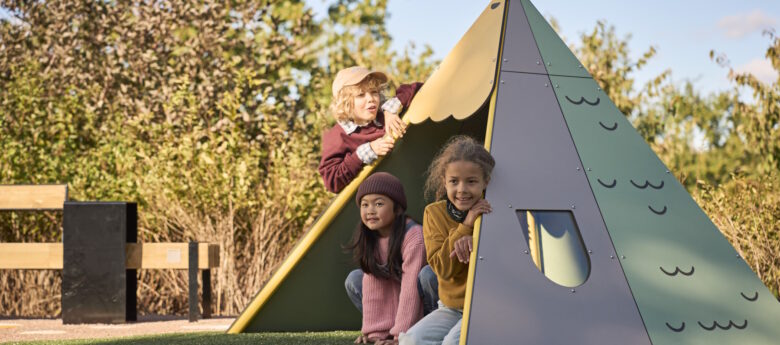
What does it really mean for a playground to be inclusive? According to Caroline van Rijckevorsel, a researcher at Jönköping University, Sweden, the conversation has evolved beyond simply removing physical barriers.
For a long time, playground accessibility was often treated as a checklist item. If a wheelchair ramp led to a tower, the job was considered done. “Over time, it became clear that without meaningful activities available once you arrive, the entire effort misses the point,” says van Rijckevorsel, who is currently pursuing a PhD in assistive technology and previously completed a master’s degree focused on inclusive playground design.
Modern thinking draws a clear distinction between accessibility and inclusivity. Accessibility focuses on physical structures – clear paths, usable equipment, and necessary accommodations. Inclusivity, by contrast, is rooted in experience and culture. It asks whether people actually feel welcome, included, and able to participate. “Inclusivity is about belonging,” van Rijckevorsel explains.
Designing for Equal Play
During her research, van Rijckevorsel collaborated with a playground manufacturer to help translate inclusive design principles into real-world products. Her work contributed to the development of play structures that include clear indicators describing how different abilities – such as mobility, vision, hearing, speech, cognitive processing, and motor coordination – are supported.
She describes the experience as highly practical and collaborative. “Having prototypes readily available made it easier to test ideas and understand how design decisions affect real users,” she says, reflecting on the hands-on nature of the project.
For van Rijckevorsel, the topic is also deeply personal. As a child, her younger brother developed severe scoliosis and was required to wear a medical brace, which temporarily excluded him from many school play activities. “It was heartbreaking to see how quickly a child could be sidelined,” she recalls.
Always Room for Improvement
Despite the challenges, van Rijckevorsel is optimistic about the future of inclusive playgrounds. She emphasizes that progress is incremental and requires ongoing evaluation.
“It takes time to see what works, what doesn’t, and how designs can be improved,” she says. Increasingly, she adds, mental and psychosocial considerations must also be factored into playground design. “No playground will ever be perfect, but there is still so much we can do.”
Aiming Higher Than the Minimum
Inclusive design efforts are often strengthened through collaboration with accessibility experts and advocacy organizations. One such specialist, Jukka Parviainen, works in facilities and accessibility consulting and has extensive experience evaluating inclusive environments.
He points out that while legislation often defines minimum accessibility standards, designers and manufacturers have the opportunity – and responsibility – to aim higher. “A slightly wider step or platform might go unnoticed by most children,” he says, “but for others, it can make the difference between being able to play or being excluded entirely.”
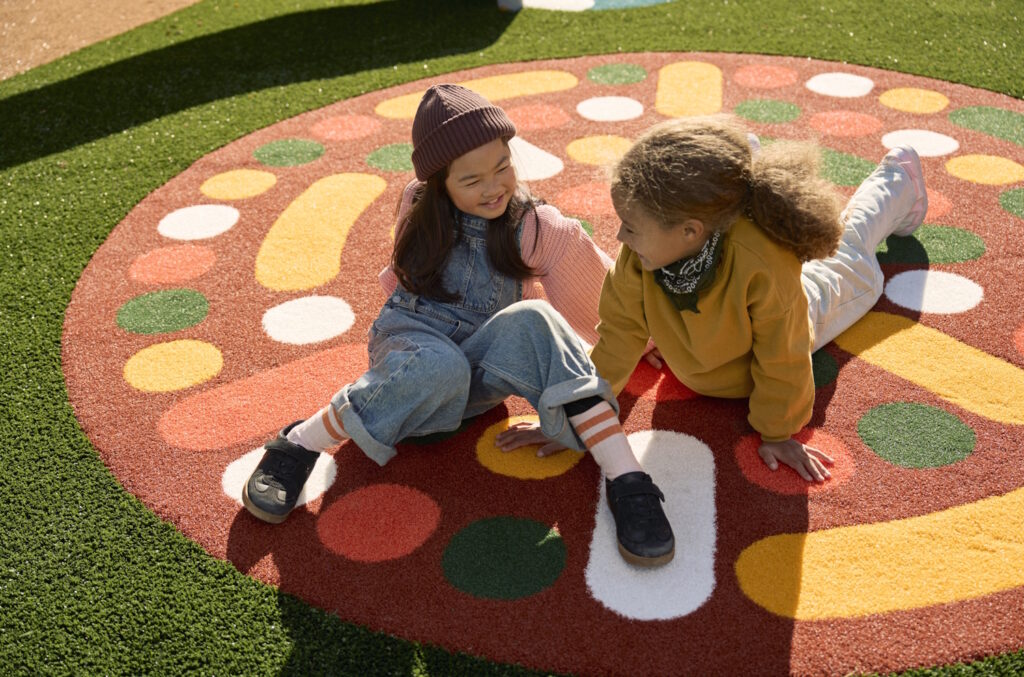
Children with visual impairments benefit from strong color contrasts, while those with cognitive challenges may be better supported through clear signage and intuitive layouts. “These adjustments don’t take away from anyone else’s enjoyment,” Parviainen notes. “They simply make play possible for more children.”
Inclusion Extends Beyond the Child
A wheelchair user himself, Parviainen emphasizes that inclusivity must consider families as a whole. “My child can walk, but I use a wheelchair,” he explains. “If I can’t access a playground, my child won’t either.”
This perspective highlights the importance of designing environments that accommodate caregivers and family members, not just the children using the equipment.
Beyond Surface-Level Solutions
True inclusivity, Parviainen argues, cannot be achieved through last-minute add-ons. “When accessibility features are treated as afterthoughts, they often frustrate the very people they’re meant to support,” he says. Meaningful inclusion must be built into the concept of play itself.
While no playground can meet every possible need, Parviainen believes continuous improvement is always possible. “There are always better solutions waiting to be explored.”
Toward Play Without Limits
A longtime wheelchair rugby athlete and frequent speaker on inclusion, Parviainen encourages designers and manufacturers to rethink what play can be. “The tools already exist,” he says. “The next step is combining them creatively.”
He believes playgrounds play a foundational role in shaping lifelong attitudes toward movement and physical activity. “For many children, physical education begins at the playground,” he says. “That experience should be open, welcoming, and accessible to everyone from the very start.”
Eveliina Salmivuori is Head of Marketing at the Lappset Group.