
Lighting & Fan Combo That Cuts Energy Costs
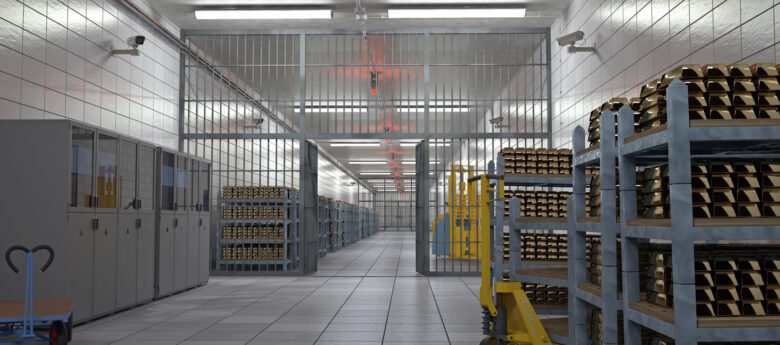
Lighting upgrades often take the spotlight in energy-efficiency conversations, but they’re only part of the solution. While LED lights dramatically reduce facility energy consumption, their performance and longevity depend on their operating conditions. When paired with HVLS fans (high volume low speed fans), LED lighting systems deliver greater overall energy savings, improved thermal comfort levels, and long-term product performance. This makes it a smart investment in warehouses, manufacturing spaces, and other high-ceiling environments.
How HVLS Fans Increase Overall Energy Savings
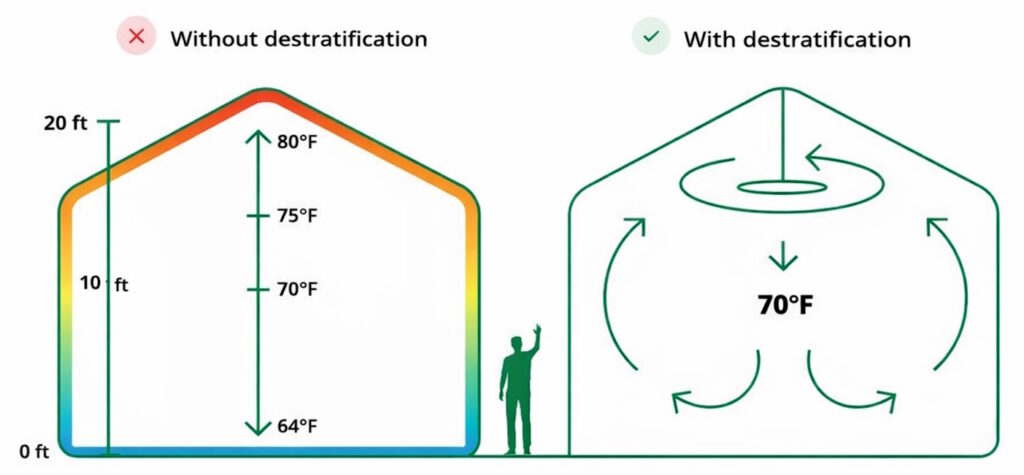
Warm air has a natural tendency to rise while cool air sinks, creating stratification. Stratification is known as an organized separation of air layers in enclosed spaces. In facilities where hot air is trapped at the ceiling, HVAC systems become prone to functional stress, especially in high-ceiling environments. This results in frequent repairs and escalated maintenance costs. HVLS fans help create a process known as destratification, which offsets the effect of stratification by circulating airflow efficiently and blending warm and cool air together. As a result, the balanced temperature profile reduces stagnant pockets of hot air, heating and cooling demands, and allows facilities to raise thermostat temperature setpoints without sacrificing comfort.
Unlock Compound Savings With HVLS Fan Systems
Heating and cooling represent one of the largest energy expenses in facilities. HVAC systems’ impact on the climate’s emissions trajectory is just as significant. HVAC operation is responsible for approximately 10% of global energy-related emissions each year (International Energy Agency, 2022). Electricity consumption for facility HVAC systems accounts for about 8% of total electricity use at U.S. manufacturing facilities (U.S. Energy Information Administration, 2024).
HVLS fans operate with a low electrical demand while providing airflow that can significantly impact cooling and heating energy use. For example, an HVLS fan that measures 14 feet in diameter will typically consume less power than operating multiple units or an extensive HVAC system for air circulation. In general, this size fan blends air across approximately 4,900 square feet. In order to provide a comparable airflow to this operation, several smaller commercial fans would need to be running at total high power.
When used in conjunction with HVAC systems, HVLS fans of this size typically reduce cooling costs by 30-40% during summer months and heating costs by up to 20% in winter through improved air circulation (LED Lighting Supply, 2025).
How Collaborative Upgrades Accelerate Product Lifespan
In facilities that have already upgraded to LED lighting, the opportunity for compounded efficiency becomes even stronger when HVLS fans are added. LED fixtures generate less internal heat than legacy metal halide systems, but they still rely on proper thermal management to reach their full rated lifespan.
HVLS fans optimize the distribution of air and temperature throughout a space. Improved air movement supports forced convection, transferring heat away from LED fixtures and drivers more effectively. Convection is the process of warm and cool air mixing, and HVLS fans accelerate this process to prevent sustained heat buildup at ceiling height.
Due to excessive heat being a primary cause of premature LED driver failure, maintaining consistent operating temperatures directly protects system reliability. By reducing prolonged thermal stress, HVLS fans help lower failure rates and minimize the need for driver or fixture replacements.
Together, these fans and LED lights offer several key advantages, beyond what either upgrade could achieve independently:
- Reduced thermal stress on LED drivers and components: Stabilized ceiling temperatures limit overheating and extend component reliability.
- Lower frequency of maintenance and replacements: Fewer heat-related failures reduce service calls and operational disruption.
- Improved lumen maintenance over time: LED lights operating within optimal temperature ranges retain output longer.
- Greater system reliability in high-ceiling environments: Balanced airflow minimizes environmental extremes that degrade performance.
- Protection of capital investment: Facilities capture the full lifecycle value of their lighting upgrade.
- Reduced total cost of ownership: Extended asset life combined with lower energy and maintenance costs strengthens long-term ROI.
Enhancing Operational Comfort & Safety
The installation of HVLS fans and LED lights together also contributes to improved facility comfort and safety. Uniform airflow helps reduce condensation on floors, equipment, and other structural components. In manufacturing or processing environments, this also minimizes moisture-related hazards, such as slippery surfaces or mold growth.
Where This Duo Delivers the Most Value
This energy-saving duo delivers the strongest value in environments where space, ceiling height, and thermal imbalance impact efficiency. Facilities with large footprints and high ceilings often face heat stress, uneven airflow, and increased HVAC demands. HVLS fans help counteract thermal stratification in tall spaces by evenly circulating warm air, ensuring consistent temperatures from floor to ceiling.
Here are some applications where LED lighting and HVLS fans will work the best together:
- Warehouses and distribution centers
- Manufacturing and industrial facilities
- Gyms and athletic complexes
- Aircraft hangars
- Food processing facilities
Measurable energy savings are a major component of efficient facility management strategies. Spaces that utilize both LED fixtures and HVLS airflow systems are not only further enhancing their own savings and product performance. They’re also positively impacting the climate when it comes to reducing carbon emissions caused by electricity generation. The smartest facilities don’t just choose between savings and sustainability, but they plan for both.
Brianna Sapienza is a Content Marketer at LED Lighting Supply with over four years of experience creating educational content for the industrial sector. As an expert in content strategy, she creates practical, jargon-free resources that simplify complex lighting, fan, and pole topics. When she’s not writing, Brianna enjoys reading, staying active, traveling, and spending time with family.
References:
- California Energy Commission. Integrating Smart Ceiling Fans and Communicating Thermostats for Energy‑Efficient Comfort. CEC‑500‑2022‑015, California Energy Commission, Nov. 2022, Integrating Smart Ceiling Fans and Communicating Thermostats for Energy-Efficient Comfort.
- Dunst, Andy. HVLS Fan Design, Application & Specification. AMCA International, 2021, HVLS Fan Design, Application & Specification.
- FacilityManagement.com. FM Communications, 2026, Facility Management.
- LED Lighting Supply. LED Lighting Supply. n.d., LED Lighting Supply.
- “HVLS Fans | Industrial Ceiling Fans.” LED Lighting Supply, 2026, Industrial HVLS Fans for Warehouses & Commercial Facilities.
- International Energy Agency. IEA, 2022, The Future of Heat Pumps.
- U.S. Energy Information Administration. How Much Electricity Is Used for Air Conditioning and HVAC in Buildings? U.S. Energy Information Administration, 2024, U.S. Energy Information Administration (EIA).