
5 Plumbing Updates That Simplify Facility Maintenance
In commercial facilities, successful plumbing is often measured by what occupants never have to think about: leaks, odors, slow drains, restroom closures, or after-hours emergency calls. For facility and maintenance teams, however, plumbing is a daily operational concern because it affects cleaning routines, labor planning, restroom appearance, occupant satisfaction, and the speed at which staff can respond to problems.
The most valuable plumbing improvements are often the ones that reduce recurring maintenance, make problems easier to isolate, and provide convenient access before a minor issue becomes a larger disruption.
- Cleanouts, Access Panels, & Isolation Valves Improve Service Access
Cleanouts in the sanitary system give maintenance teams and plumbers access points for snaking drains. If an area repeatedly experiences drainage issues and no cleanout is available, it may be worth adding one, such as beneath a sink or behind an access panel in a hallway.
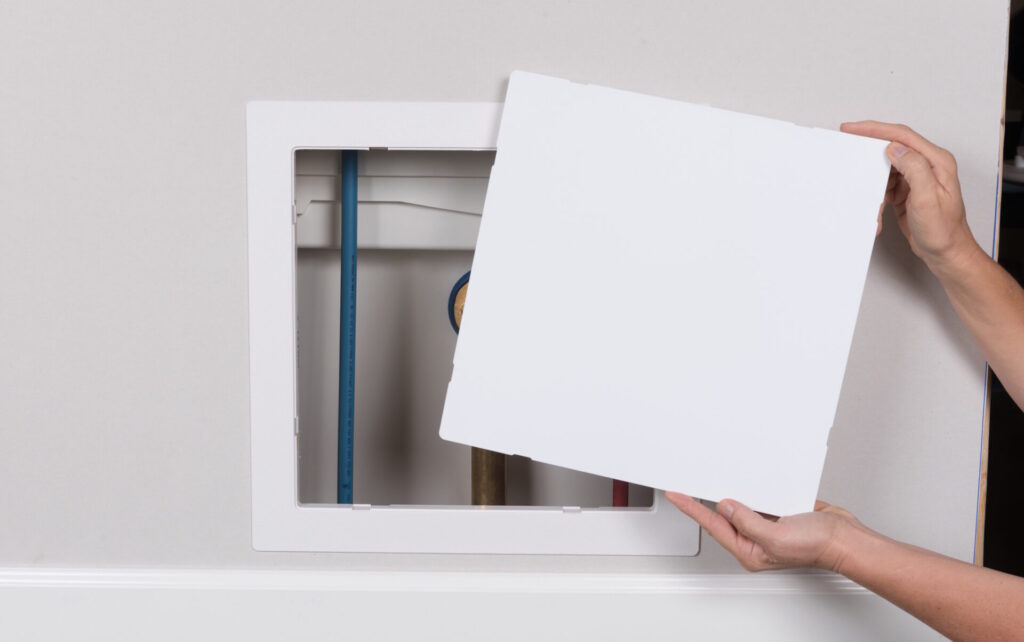
A plumbing access panel provides a practical way to reach shut-off valves, drains, cleanouts, and other components concealed behind walls. Rather than cutting and repairing drywall every time service is needed, a reusable panel can make future maintenance faster and less disruptive.
Access panels are generally installed between wall studs and may be flush-mounted or surface-mounted during construction or rough-in. Typical locations include behind bathtubs and showers or inside closets, where they can remain discreet while still providing useful access.
Adding isolation valves to the water distribution system or cleanouts to the sanitary system can also make future service easier.
These additions are often considered only after a problem occurs. When a wall is already open for a repair, however, it can be a good opportunity to add a cleanout or access panel and finish it discreetly. If a related issue develops later in the same unit, an adjacent unit or the floor below, maintenance teams then have a convenient point of entry.
For valves, the goal is to isolate a limited area instead of shutting down an entire wing or floor. Quarter-turn isolation valves at fixtures are common, but if a leak or failure occurs upstream of that point, such as inside a wall, another means of isolating the affected section can be valuable.
Older plumbing systems often included more isolation points than many newer installations. Service plumbers commonly installed valves for individual fixtures in ceilings, allowing one section to be shut down for repairs while the rest of the building remained operational.
When water is already shut off, and a wall is open for service, facility teams may want to consider whether adding another valve would improve future isolation. A strategically placed valve can help limit the scope of a shutdown and reduce disruption for occupants.
- Tank vs. Tankless Water Heaters: Consider the Maintenance Routine
Water-heating equipment can also influence maintenance workload and operating costs. In some settings, particularly smaller commercial buildings or point-of-use applications, tankless water heaters may offer service advantages.
Storage-tank water heaters should be flushed as part of routine maintenance, but the process can involve a significant amount of water and may be more cumbersome than servicing a tankless unit.
Tankless units are typically configured with service in mind. Valve kits allow the unit to be isolated and flushed, and the process can often be completed in about 45 minutes without adding separate service valves.
Once facility personnel are trained on the procedure, routine flushing may also be handled by an in-house maintenance team rather than calling an outside plumber for every service interval.
Servicing a tankless unit can also be less messy than draining a storage-tank water heater, which generally requires a floor drain or another suitable discharge point.
A tankless unit also eliminates the need for a storage tank. In a conventional water heater, sediment can settle across the bottom of the tank and contribute to deterioration over time. With tankless equipment, water flows through tubing rather than sitting in a large tank, reducing the opportunity for sediment to collect.
A tankless descaler kit, typically consisting of a bucket, pump, and descaling solution, can further simplify routine service. Instead of draining a full storage tank, the maintenance process recirculates or flushes solution through the tankless unit using the bucket.
Because tankless water heaters are wall-hung, they can also free up floor space. That may be useful in facilities with small mechanical rooms or crowded utility closets, where every square foot matters.
- Choose Drain Components That Are Easier To Clean
Restroom design directly affects daily cleaning labor. Drains, strainers, and stoppers can be evaluated not only for appearance, but also for how easily staff can access, clean, and maintain them.
Shower drains with removable debris baskets or accessible strainers can capture hair and other material before it travels farther into the drainage system.
Over time, that can help reduce the likelihood of a larger blockage that requires a plumber to cable or snake the line. Aftermarket drain covers are available, but an integrated basket or strainer can provide a cleaner, more finished appearance in guest-facing spaces.
In hospitality settings, where cleaning staff regularly enter guest rooms and showers, removable baskets can be included on the housekeeping or maintenance checklist. Routinely pulling and cleaning the basket is a simple task that can help prevent buildup.
Lavatory drains can also be selected with maintenance in mind. Designs that allow the stopper to be lifted from above the sink make it easier to remove hair and debris without disassembling the piping beneath the fixture.
That can be especially helpful in hotels and other high-use facilities, where hair and debris can quickly collect around a pop-up or pop-down drain assembly. A removable stopper allows staff to clean the drain from above and return it to service quickly.
Avoiding unnecessary disassembly also reduces risk. Any time plumbing that was not leaking is taken apart and reassembled, there is a possibility that a connection could leak afterward.
Another option is a lavatory drain that sits completely flush with the sink basin. In addition to creating an uninterrupted surface, this type of design can help prevent small items, such as jewelry, from entering the plumbing system, a useful consideration in hospitality and other high-turnover restrooms.
- Drain Seals Can Help Control Odors & Insects
Floor drains are often installed with trap primers. A primer, sometimes connected to a nearby fixture, periodically supplies water to the trap so the water seal does not evaporate and allow sewer gas into the room.
This is particularly relevant for floor drains that rarely receive water, such as emergency drains in public restrooms. Aside from occasional mop water, the drain may see little use, making a dried-out trap and resulting odor more likely.
Trap primers, however, are mechanical devices and can eventually fail. If the failure goes unnoticed, staff may end up manually adding water to the trap to control odors.
A drain seal is another option. It can be installed in the drain to help block sewer gas and insects while eliminating the primer and its associated mechanical components. If the seal eventually needs replacement, it can be removed and replaced from the drain opening.
- Linear Drains Can Reduce Shower Grout Maintenance
When evaluating shower drainage, facility teams may also want to consider linear drains, which can reduce the number of grout lines and seams where mold, mildew and grime tend to collect. Fewer grout joints can mean less surface area to scrub and maintain.
By replacing the four-way slope of a traditional shower pan with a single-plane slope, a linear drain can support large-format tile and solid-surface materials from the bathroom into the shower. Properly designed, the system can also promote complete water evacuation and help reduce pooling near the shower entrance.
Linear drains with wall-to-wall coverage and fully sloped troughs can promote efficient drainage while reducing standing water, which may help limit slip hazards and conditions that support mold, mildew, and bacterial growth.
Make Plumbing Part of the Preventive Maintenance Checklist
A scheduled maintenance plan is essential wherever facility staff is responsible for building upkeep. A recurring checklist can help identify small plumbing and mechanical issues before they become emergencies. For example, a routine inspection could reveal a dead backup sump-pump battery before the next major storm.
Many failures are discovered only when the equipment is needed most. A preventive maintenance program can catch a number of these issues through relatively simple inspections and service tasks.
Basic system knowledge matters as well. Facility personnel should know where major water shutoffs are located and maintain clear valve charts or other documentation so the right section of the building can be isolated quickly during an emergency.
The most useful plumbing upgrades support overall facility operations rather than addressing a single repair in isolation. Occupants benefit from cleaner, more comfortable restrooms and service areas, while maintenance teams gain better access, fewer surprises, and a more predictable workload.
When planning a renovation or repair, facility leaders should consider whether the work can also make future cleaning, inspection, isolation or service easier. Improvements that simplify those tasks can continue to deliver value long after the immediate project is complete.
Sean Comerford is Manager, Inside Sales and Tech Support, at Oatey Co. He is a third-generation tradesman with nearly 20 years of plumbing experience, including serving as the lead plumber for commercial/residential new-construction, service and fire protection jobs. He holds a State of Ohio Fire Protection License for Sprinkler and Standpipe.