
Pressure Washing: The Secret to Building Longevity

When it comes to maintaining a building, most facility managers and property owners focus on the obvious priorities: HVAC systems, plumbing, electrical upkeep, and structural safety. While these are essential, there’s one practice that often flies under the radar but holds incredible potential for long-term building health and savings – pressure washing.
More than just an aesthetic upgrade, regular pressure washing plays a direct role in preserving the life of your building’s key elements, protecting your investment, and keeping operational costs under control. If you’re a facility manager or property owner wondering how to get ahead in proactive maintenance, this article delivers the one solution your maintenance checklist might be missing.
The Science Behind Pressure Washing
At its core, pressure washing uses high-powered water jets to remove stubborn dirt, grime, mold, mildew, and other contaminants from surfaces like concrete, brick, siding, and roofing. However, the benefits go far deeper than just appearances.
These contaminants, left unchecked, can deteriorate materials over time. Mold and algae, for instance, not only create slippery and hazardous walkways but also cause gradual rot in wood and other porous surfaces. Similarly, pollutants from vehicle exhaust and industrial activities settle on building exteriors, weakening protective coatings, and accelerating wear and tear.
Ignoring these buildups doesn’t just harm the structure but can also lead to health risks. Mold spores and algae can impact air quality, affecting residents or employees. By addressing these elements, pressure washing ensures a cleaner, healthier environment.
Signs Your Facility May Be Overdue for Pressure Washing:
- Discoloration or staining on exterior surfaces
- Cracks or signs of erosion in concrete walls or walkways
- Noticeable mold, algae, or mildew growth
- Decreased curb appeal or tenant complaints
Long-Term Savings Through Preventative Maintenance
Think of pressure washing as your building’s first line of defense. While it may appear to be a surface-level activity, the long-term savings it delivers are substantial.
Why Regular Washing Works:
- Prevents Structural Damage: Dirt, mold, and debris are notorious for contributing to rot, rust, and decay. Regular cleaning stops small problems from snowballing into costly repairs.
- Extends Material Life Cycles: Surfaces like siding, concrete, and roofing last longer when free from damaging contaminants. Repainting, resurfacing, and replacing materials can often be delayed with routine pressure washing.
- Cuts Repainting Costs: Paint and coatings on buildings remain vibrant and intact longer when cleaned periodically, posing less need for expensive, full-scale repaints.
Real-World Savings
Facilities that invest in scheduled pressure washing report saving thousands annually in maintenance costs. For instance, a commercial office park in Raleigh, North Carolina, reduced siding replacement frequency by 5 years due to a bi-annual washing schedule. The upfront cost of pressure washing? $5,000 per year. Cost of siding replacement? $50,000. You do the math.
Proactive maintenance is much less expensive than reactive repairs. When incorporated into your facility’s operations plan, pressure washing becomes a cost-saver rather than an expense.
Seasonal Maintenance Strategy
Timing matters as much as frequency. Effective pressure washing adapts to the seasons to address specific challenges while preparing your property for what’s to come.
- Spring Cleaning: Winter can leave behind layers of salt, grime, and residue from snow and ice. A spring pressure wash refreshes your building and preps it for increased foot traffic and warmer months.
- Fall Maintenance: Before winter hits, clear away pollen, dirt, and algae that could weaken surfaces during freezing temperatures. This also reduces hazards such as icy walkways when precipitation hits algae-covered areas.
- Regional Considerations: Whether addressing salt spray in coastal areas or cleaning pollen-heavy regions’ exteriors, tailor your strategy to environmental conditions. Seasonal pressure washing is a smart way to mitigate risks posed by the weather and local climate.
Pair this with other seasonal maintenance (like gutter cleaning or window washing) to create a streamlined facility management plan.
Common Challenges & Best Practices for Large Facilities
Maintaining a clean exterior for large facilities brings certain challenges, but these can be addressed with proper planning and execution.
Common Challenges:
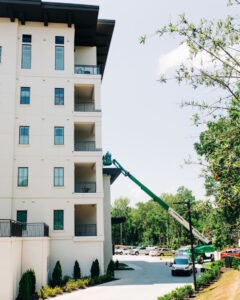
- Scale & Access: Large buildings often have hard-to-reach areas requiring specialized equipment.
- Operational Interruptions: Cleaning around busy schedules can be tricky but is manageable with strategic timing.
- Runoff Management: Environmental regulations require proper disposal of all chemical or water runoffs.
Best Practices:
- Use the Right Equipment: Adjust pressure settings based on the material being cleaned to avoid accidental damage. For example, concrete can handle stronger pressure, while siding requires a gentler approach.
- Water Reclamation: Partner with professionals who prioritize eco-friendly practices, including reclaiming and responsibly disposing of wastewater.
- Hire Trained Experts: Professional cleaners come with both the expertise and tools to tackle complex jobs without the risk of harming property. Invest in experienced, reputable partners to get the most out of your cleaning efforts.
Facility managers should also establish regular cleaning schedules and include inspections in their routine to spot trouble areas early. Proactive management is the key to overcoming challenges and achieving long-term success.
A Proactive Approach to Facility Health
It’s time to move away from reactive maintenance and take on a proactive mindset. Pressure washing doesn’t just brighten surfaces; it protects your facility’s structural integrity, reduces health risks, and delivers measurable cost savings. By making it a part of your routine maintenance plan, you’re taking a vital step toward longevity and cost efficiency for your building.
Facilities aren’t just spaces; they’re investments. And like any investment, they require care to thrive. A little effort today goes a long way in preserving your building’s future.
An ounce of pressure washing can prevent a pound of repairs. By prioritizing it in your maintenance routine, you’re ensuring a stronger foundation for years to come.
Don’t wait until buildup turns into breakdown. Assess your current cleaning strategy and see where pressure washing can make the biggest impact. It’s not just about looking good – it’s about protecting what matters most.
Dylan Harris is the Director of Operations at Window Hero and has been instrumental in driving the company’s growth since 2017. Starting his career in the field, Dylan’s hands-on experience has shaped his results-driven approach to leadership. He’s passionate about operational excellence, efficiency, and creating customer-first solutions.