
Managing Root Intrusion Through Preventive Maintenance
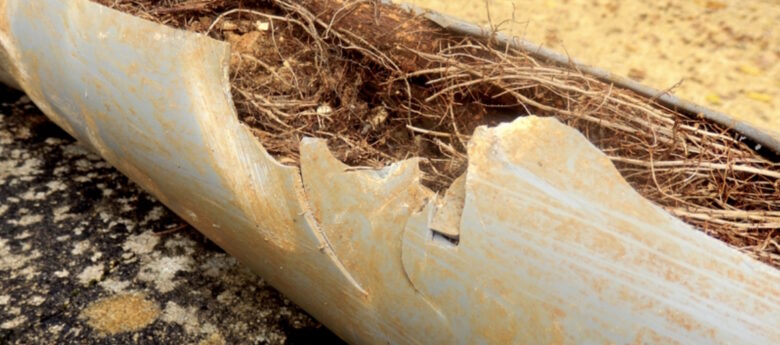
Root intrusion is one of the most damaging and costly issues affecting a building’s sewer system. For facility managers responsible for maintaining operational continuity, root-related sewer problems often surface as slow drains, foul odors, repeated service calls, or, in worst-case scenarios, disruptive and expensive system failures.
Roots are naturally drawn to sewer lines because they provide consistent moisture and oxygen. While this environment is ideal for plant growth, it poses a serious threat to underground piping, particularly in older buildings with aging infrastructure.
Why Root Intrusion Is a Facility Risk
When roots infiltrate a sewer line, they restrict flow and reduce the system’s hydraulic capacity – its ability to move wastewater efficiently. Over time, this restriction can lead to backups, overflows, and unsanitary conditions, impacting occupant comfort, safety, and regulatory compliance.
Older clay and cast-iron sewer systems are especially vulnerable. Historically, clay pipe sections were joined using concrete-filled hubs. As this material deteriorates with age, small gaps form, allowing roots to penetrate and expand inside the pipe. Similar vulnerabilities exist in partially collapsed piping or corroded cast iron, which are common in legacy facilities.
If left unaddressed, root intrusion can progress beyond internal blockages. External root growth may eventually encapsulate sewer lines, exerting pressure that leads to pipe deformation or collapse – often requiring excavation and full line replacement at high cost.
Preventive Measures Start at Installation
While many facility managers inherit existing systems, understanding proper installation practices is important for long-term planning. Correct backfilling and compaction help prevent pipe sagging, which creates stress points that roots exploit.
The International Plumbing Code states: “Backfill shall be free from discarded construction material and debris. Loose earth free from rocks, broken concrete and frozen chunks shall be placed in the trench in 6-inch (152 mm) layers and tamped in place until the crown of the pipe is covered by 12 inches (305 mm) of tamped earth. The Backfill under and beside the pipe shall be compacted for pipe support. Backfill shall be brought up evenly on both sides of the pipe so that the pipe remains aligned. In instances where the manufacturer’s instructions for materials are more restrictive than those prescribed by the code, the material shall be installed in accordance with the more restrictive requirement.” ~ 306.3 Backfilling
While proper backfilling is a reliable way to aid in preventing root intrusion, deterioration of concrete or rotted-out cast iron is inevitable over time, allowing roots to grow through the openings.
As mentioned, if left untreated, root intrusion can eventually lead to a complete collapse of the sewer system. The roots on the outside of the pipe will encapsulate the pipe, creating pressure that will cause the sanitary system to collapse and shut down.
At that point, the last resort would be to dig up the sewer line, which could cost the home or building owner thousands of dollars, depending on location. Pipelining offers an alternative solution to avoid digging up the damaged sewer line. A cured-in-place pipe (CIPP, epoxy liner) is applied to the inside of the pipe, sealing any opening or gaps to stop leaks and prevent future root intrusion.
Manufacturers offer various tools for cutting and cleaning out roots; however, it’s important to follow certain steps to avoid damaging the sewer line.
Mechanical Root Removal
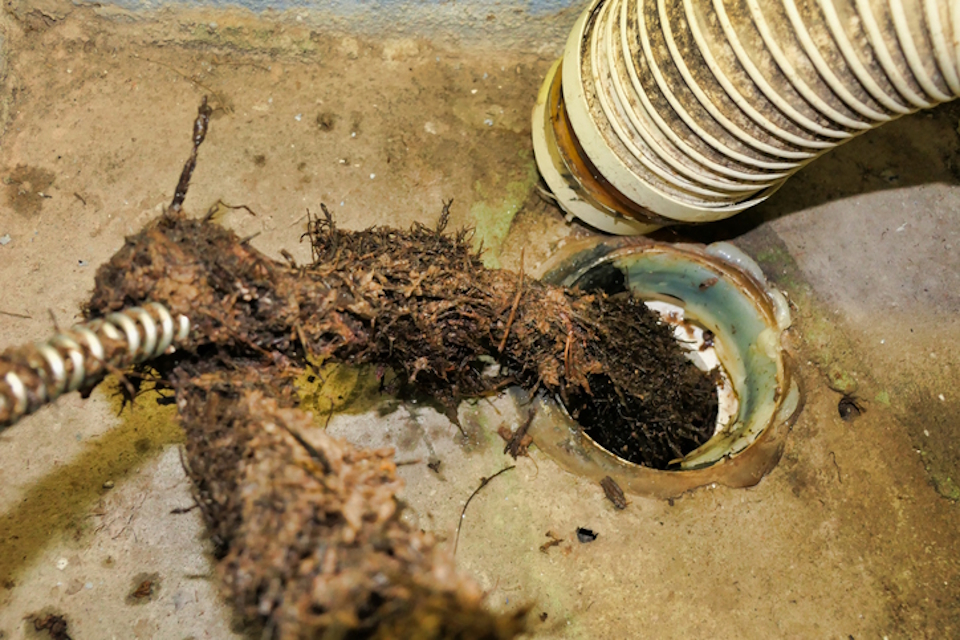
Once root intrusion is identified, mechanical removal is essential before any chemical treatment is considered. Common tools include root-cutting snakes, jetters, and specialized nozzles designed to clear the full internal diameter of the pipe.
Key considerations for effective root removal include:
- Proper cable size: If you don’t use the correct cable size, you could either damage the tool or cause an injury. Say, for instance, you use a smaller snake, it will get caught in the roots and you’re left with a 20-foot cable stuck in the line. An improperly sized cable could get wound up or whip back, potentially causing injury.
- Proper head size: As noted above, using the wrong head size won’t provide a full cleaning of the inside diameter of the pipe. Sizing is based on the pipe diameter. Most sewer lines are 3 to 4 inches, but the main sewer line in commercial applications may be larger. A standard rule of thumb is to use a cable at least ¾ inch in diameter.
- Maintaining mechanical equipment: Maintenance is key. If the root cutting head is dull or damaged, it won’t be as effective. This also applies to snake cables. If a cable is kinked or bent, it can bind, resulting in injuries and inefficiency because it has a weakened point. It could even break off and get stuck in the sewer.
High-pressure sewer jetting is often used after cutting to remove residual debris and restore flow capacity, particularly in larger commercial sewer lines.
Chemical Treatments As Preventive Maintenance
Chemical root control should be viewed as a preventive maintenance measure – not an emergency solution. These products are most effective when applied after mechanical removal, allowing the treatment to coat remaining root structures and inhibit regrowth.
Foaming agents and herbicides are commonly used, depending on system configuration and local regulations. Herbicides formulated with copper-based compounds are designed to adhere to root masses, dissolve slowly, and prevent future intrusion when applied on a regular schedule.
When used as directed, these treatments can:
- Reduce recurring blockages
- Minimize emergency service calls
- Protect pumps from overload caused by restricted flow
- Extend the service life of existing sewer infrastructure
Facility managers should always confirm that chemical treatments comply with state and local regulations, as some jurisdictions restrict the use of certain active ingredients.
Best Practices for Ongoing Control
For optimal results, chemical treatments should be applied during low-flow periods – typically overnight – so the product remains in contact with roots long enough to be effective. Many facilities benefit from semiannual or annual applications, depending on root severity, system age, and surrounding vegetation.
Safety and handling protocols are equally important and should include appropriate PPE, secure storage, and strict adherence to manufacturer instructions.
A Proactive Approach Pays Off
Root intrusion rarely announces itself early. By the time symptoms appear, damage is often already underway. A proactive maintenance strategy – combining inspection, mechanical cleaning, and scheduled chemical treatment – helps facility managers avoid unplanned downtime, protect capital assets, and control long-term maintenance costs.
Sean Comerford is Manager, Inside Sales and Tech Support at Oatey Co. He is a third-generation tradesman with nearly 20 years of plumbing experience, including the lead plumber for commercial/residential new-construction, service and fire protection jobs. He holds a State of Ohio Fire Protection License for Sprinkler and Standpipe.